


What Is Crypto Market Depth and Why It Matters for Your Trades
Market depth determines how much you can trade without moving the price. Learn how to read depth for Solana DEX tokens and why thin markets create outsized risk.
 Chawki Malek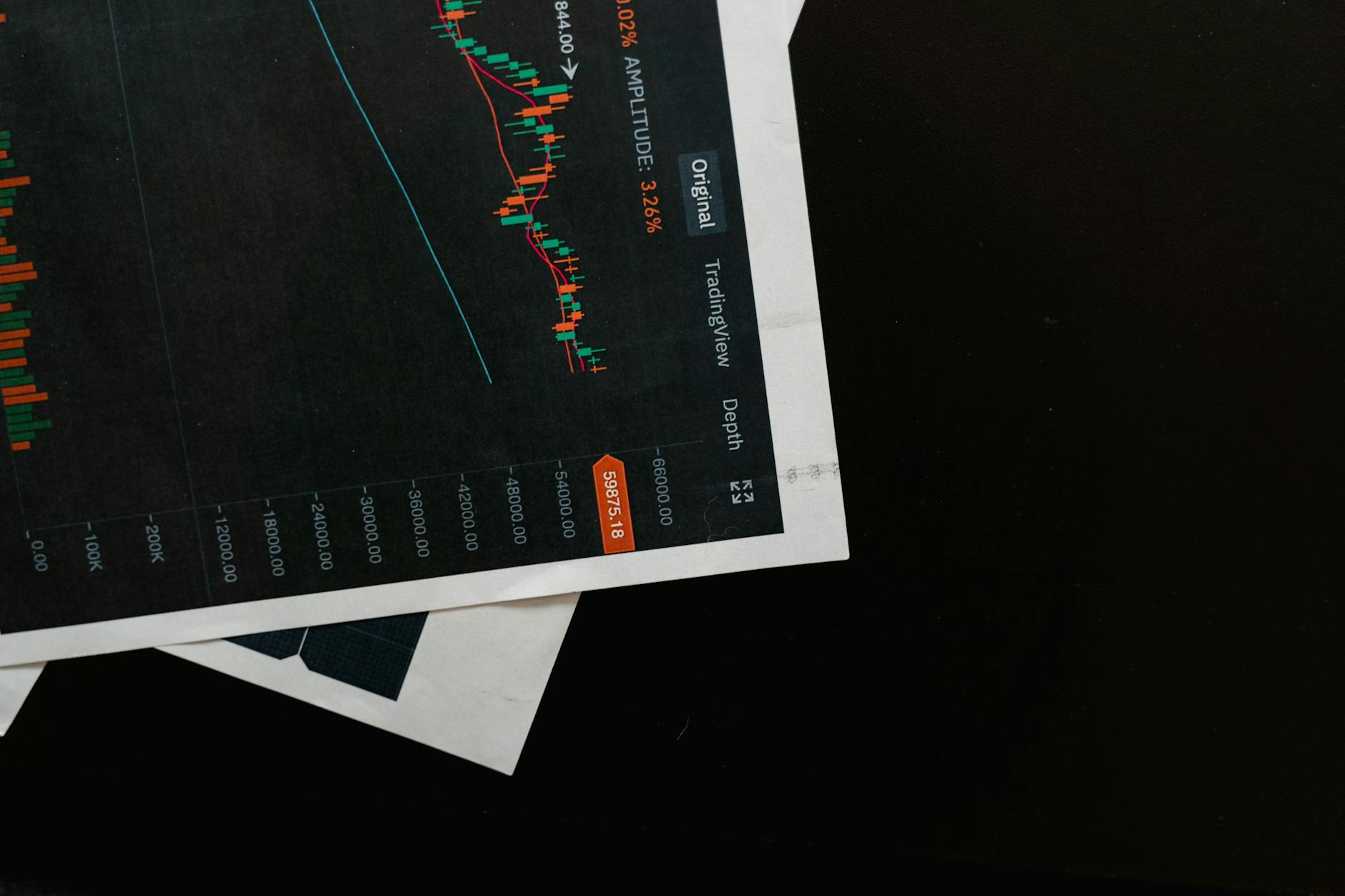
The measure of how much trading the market can absorb
Market depth is a measure of the market's capacity to absorb buy or sell orders without significant price movement. A deep market can handle a $100,000 purchase without moving price more than 1%. A shallow market might move 20% on a $10,000 purchase. For Solana token traders, market depth is one of the most practically important metrics to understand — it determines whether you can actually execute your intended trade at a reasonable price, and whether you can exit a position without causing the price to collapse against you.
How market depth works on centralized exchanges
On a centralized exchange with an order book, market depth is visualized as a depth chart: a visual representation of all pending buy orders (bids) at prices below the current market price, and all pending sell orders (asks) at prices above. The "depth" refers to the cumulative volume available at each price level.
A deep order book has large volumes of bids and asks clustered closely around the current price. A thin order book has sparse bids and asks, often with significant gaps between price levels. When you submit a market order that exceeds the volume available at the best price level, your order "walks up" the order book, executing at progressively worse prices until the full order is filled.
How market depth works on Solana DEXs
On AMM-based DEXs (Raydium, Orca), there is no order book — market depth is expressed through the size of the liquidity pool. The constant product formula (x × y = k) creates a price curve where larger trades cause more slippage. The "depth" of a DEX pool is proportional to the total value locked.
For concentrated liquidity pools (CLMM/Whirlpool), market depth is not uniform across all prices — it's concentrated in the LP's specified price range. If you're trading at a price within the LP's range, depth is excellent. If price moves outside the range, depth suddenly disappears entirely.
Estimating depth before trading on Solana
Jupiter price impact estimate: When you enter a trade on Jupiter, it displays an estimated price impact before you confirm. This is the most direct indicator of market depth for your specific trade size. Price impact above 3% indicates your trade is large relative to available liquidity.
Hannisol's exit ability score: This score directly incorporates liquidity depth analysis — it estimates whether a position of typical size can be exited without excessive slippage. A low exit ability score is a direct signal that market depth is insufficient for comfortable trading.
Why thin markets amplify all risks
- Pump-and-dump viability increases: Moving price 50% in a thin market requires far less capital than in a deep market — making manipulation economically feasible for smaller operators
- Liquidation cascades are more severe: When leveraged positions are liquidated in a thin market, forced selling moves price dramatically
- Whale exit impact is disproportionate: A single holder selling 10% of supply can collapse price in a thin market; the same action in a deep market barely registers
Always evaluate market depth as part of your pre-purchase process. Hannisol incorporates liquidity depth into its exit ability scoring. Check any token at Hannisol.
Ready to apply this to a real token?
Run any Solana mint address through Hannisol's 8-dimension risk engine — free, no signup required.